Preventative Sprinkler Upkeep That Conserves Water and Money
Good irrigation feels invisible. Yard remains also, plant beds prosper, and the water costs sits where it should. When a system slips out of tune, the indicators are easy to miss out on in the beginning: a patch of yellow near the driveway, a soaked edge by the fencing, a faint hiss at a head that made use of to be peaceful. By the time the yard starts saying back, lost water and lost cash have been dripping away for weeks. Preventative lawn sprinkler maintenance is exactly how you damage that cycle. It is less concerning fixing what is broken and much more about maintaining a functioning system lined up with the site, the period, and exactly how plants really utilize water.
I have actually walked hundreds of buildings after dawn with a flashlight and a notepad. The pattern repeats. Many homeowners and property managers do not need a brand-new system. They require a proficient audit, a couple of targeted components, and a routine that reflects truth instead of the default program left by the installer years back. The return on those little efforts is prompt. Water use decreases, dry places even out, surprises go away from the energy costs, and the system expands quieter since it is no more battling itself.
Why tiny problems set you back large money
Irrigation wastes money in three common methods: undetected leaks, bad distribution, and bad timing. Leakages conceal in shutoff boxes, at threaded fittings, or in lateral lines chewed by origins. They do not constantly make a pool. A half gallon per minute seep that runs three times a week for 15 minutes adds up to roughly 90 gallons a week, or greater than 4,500 gallons a year per leak. Multiply that by a couple of zones and a lengthy period and it matters.
Poor distribution is more difficult. If a zone waters unevenly, individuals crank up mins to satisfy the driest spot. The rest of the zone obtains sunk. The fast solution conceals the reason and increases the cost. Sprays that do not match rainfall prices, heads set too reduced, or mismatched arcs all try circulation harmony. I have actually seen two identical areas where one utilized 30 percent much more water to attain the same grass color simply as a result of mismatched nozzles and a 10 psi distinction at the head.
Timing is the quiet burglar. Programs established for July run in April. Timetables disregard color under a developing oak. Run days ride through a rainy week due to the fact that the controller can not see the weather. Watering the right amount at the incorrect time is still waste.
Start with pressure, not the controller
People love to jump into the controller and modify runtimes. That resembles including air to your tires while you have a nail in the tread. System stress sets the stage for everything else. Too high, and sprays atomize into mist that drifts off in the slightest breeze. Also low, and heads throw short with ragged patterns.
A fast area check defeats a guess. A stress scale on a hose bib is useful, but it just reveals static stress. What you respect is dynamic pressure ahead while the zone is running. Thread a gauge onto a riser, run the zone, and read it. For common taken care of sprays, go for 30 psi at the head. For rotors, 45 psi is a good target. Several spray bodies now include built-in stress law. If you see fogging or hear a hiss, you possibly have extreme pressure at the nozzle. In those cases, exchanging to push managing spray bodies frequently spends for itself in a single season.
On a tiny commercial site last summertime, we replaced 38 typical spray bodies with controlled variations and added a 40 psi regulator after the heartburn. We did not transform the timetable. Water usage dropped 18 percent over the following three billing cycles. Dry places vanished because throw ranges returned to spec. It cost less than a mid-range wise controller.
The silent fixes that move the needle
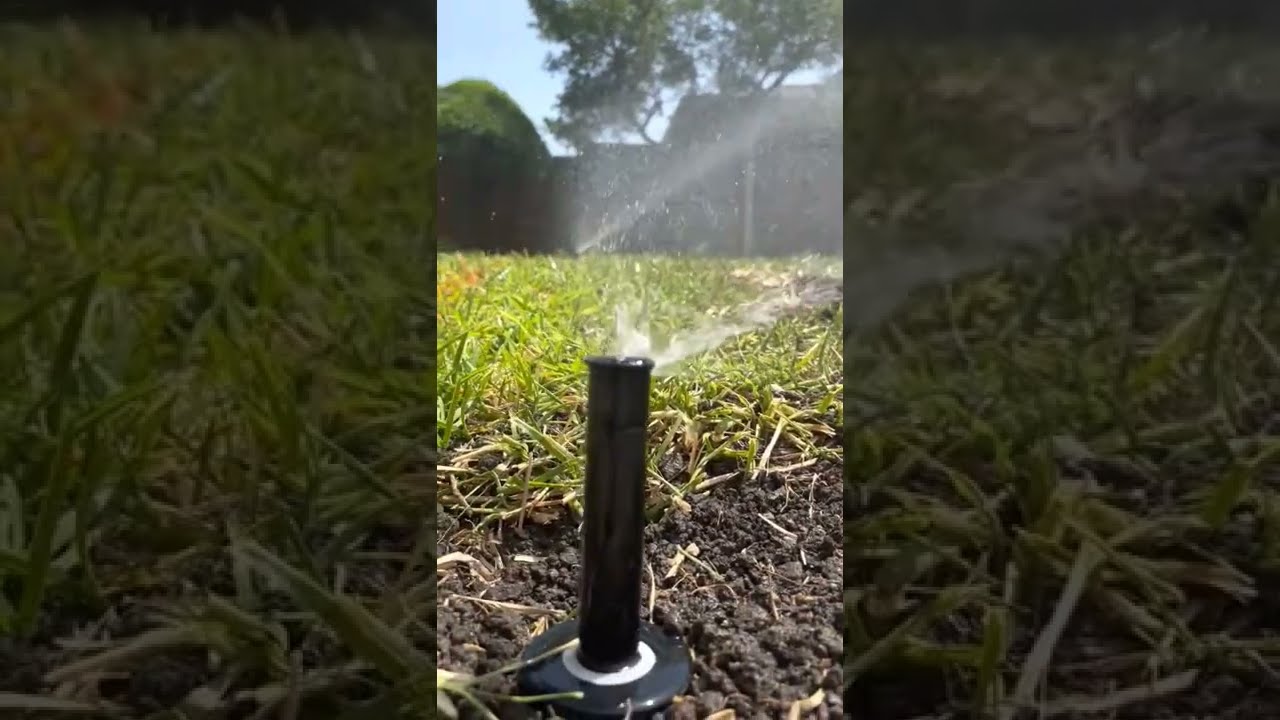
Some of the most effective savings come from tiny, boring tasks. Raising hidden heads conserves water due to the fact that the pattern clears turf and hardscape, removing low arcs that under-throw. Fixing a tilted head stops overspray into the sidewalk. Replacing a clogged nozzle brings back matched rainfall across a zone. Real lawn sprinkler repair work is not glamorous. It is methodical, and it works.
Threaded connections should have unique focus. Wrap tape easily, tighten up with restriction, and utilize thread sealant where resonance can loosen up installations. I have actually opened shutoff boxes where a 3 dollar combining bled more water than a lengthy side leak. It had been doing it for years.
Missing check valves inside heads are an additional quiet leakage. Without a check shutoff, nadirs in the area drainpipe between runs. That is water you already paid to pressurize, currently dripping under the walkway. Heads with essential check shutoffs quit that drainpipe down and cut the post-run puddles that bring in insects and stain concrete.
Calibrate runtime to rainfall, not habit
Most routines are constructed from habit. 10 mins on sprays, thirty on blades. Properly is to match runtime to rainfall rate and plant water requirement. If your nozzle puts down 1.5 inches per hour and your lawn needs 1 inch each week in peak summertime, then the mathematics claims concerning 40 mins a week for that area, gotten into numerous cycles if overflow endangers. In spring, that might come by half, and in autumn by more.
Matched precipitation issues. Combined nozzles in an area do not use water evenly. A spray head fitted with a high effectiveness rotating nozzle will generally apply much less water per minute than a common fixed spray. If you mix them on one valve, runtime that pleases the slow nozzle floodings the rapid one. Maintain nozzle households consistent within an area, and just mix when you have no choice, after that make up it with tailored runtimes or split that area right into its very own valve throughout future sprinkler installation upgrades.
Smart controllers aid, yet they still need straightforward inputs. Program nozzle kind, root deepness, incline, sun exposure, and soil kind. After that validate the result on the lawn. If a controller determines that shaded fescue on clay must obtain 14 mins twice a week but the lawn starts to stress and anxiety by day 3, readjust the regularity. Smart does not mean hands off. It indicates the controller ends up being a fast partner in your field tests.
A seasonal rhythm that prevents surprises
Irrigation is seasonal naturally, even in regions with mild winter seasons. Springtime start-up is more than turning water on. It is your chance to reset after the off period, catch winter season damage, and reconstruct a routine around present plant needs. Midseason checks combat drift as days heat, controller batteries fall short, and lawn mower blades bump risers. Loss shutdown, also without a full winterization, reduces breaks during freeze occasions and cuts off waste when evapotranspiration drops.
Here is a short seasonal rhythm that keeps most systems fit without turning upkeep into a 2nd job.
- Spring start-up basics: open the primary valve slowly to prevent water hammer, examination each zone, raise or correct heads, replace blocked or mismatched nozzles, rebuild dripping valves, confirm backflow operation.
- Early summer season song: step pressure at depictive heads, right misting with managed bodies, rectify runtimes by area based upon plant action, verify rainfall sensing unit or weather condition assimilation works.
- Midseason audit: enjoy each zone throughout, mark low insurance coverage with flags, repair overspray onto hardscape, look for wet shutoff boxes that point to little leakages, flush drip filters.
- Late summertime changes: rise cycle and saturate for slopes and clay, shorten private cycles to lower runoff, validate heads ride over peak turf height after summer season growth.
- Fall and pre-freeze: step down runtimes as temperature levels decrease, close seclusion shutoffs if frost is anticipated, drainpipe backflow where required, schedule full winterization for hard freezes.
Each of those bullets indicate easy field work. Doing them prior to the system complains is why preventative lawn sprinkler upkeep conserves both water and the Saturday afternoons you would rather spend far from muddy valve boxes.
The best way to investigate a zone
Watching an area with objective is different from glancing at an eco-friendly grass. Bring flags, a screwdriver, a spare nozzle set, and a stress scale. Move in a loophole. Concentrate on one failure mode at a time so you do not miss out on details. The objective is to leave the area with also coverage at the most affordable pressure that still meets head specifications, without visible leaks and a timetable that fits the plants.
- Confirm head spacing and arc: heads must toss to the following head, not nearly to it. Adjust arcs to stay clear of wall surfaces and pathways while still fulfilling head to head coverage.
- Set elevation and plumb: lift buried or low heads up until the leading rests just above the turf. Align tilted risers so patterns are symmetrical.
- Match nozzles: systematize nozzle households within the zone, replace clogged or put on inserts, and verify matched rainfall across various arcs.
- Test stress at the head: mount a scale momentarily, run the zone, and document vibrant pressure. Include stress controlled heads or a zone regulator if readings are high.
- Inspect for leakages: seek bubbling around risers, wet shutoff boxes, and sluggish drips at threaded joints. Take care of before you leave the zone.
A disciplined loophole like that takes 10 to 20 mins per area when you have the rhythm. On sites where water prices are high, those mins often pay for themselves within a month.
Drip where it makes sense, and preserve it like you suggest it
Drip watering lowers evaporative losses and targets water where origins actually live. It is not magic. Leak needs filtration, stress decrease, and normal flushing. On retrofit work I see blocked emitters and algae ridden filters generally. The repair is easy. Install an obtainable, clear-bodied filter on every drip shutoff. Set up a monthly flush throughout height season. Keep pressure between 20 and 30 psi at the emitter line. If a bed shares a valve with sprays, separate it at the following chance. Various application rates and run times make complex everything.
In a yard with blended roses and perennials, we transformed 2 spray areas to drip with 0.9 gallon per hour emitters on 18 inch spacing, included a 25 psi regulatory authority and a Y filter, and reduced yearly water use because location by concerning 35 percent. Plant health enhanced due to the fact that vegetation remained completely dry and soil remained equally wet. The trick was upkeep. We flushed lines at the beginning of monthly and changed filters two times a season. Disregard either step, and drip transforms breakable and cranky.
Backflow, valves, and the parts that choose your weekend
An overlooked backflow setting up welcomes both contamination and freeze damages. Examination or at the very least exercise it each year. If you are in a freeze vulnerable area, insulate and drain it when temperature levels dip. I have actually repaired a lot of split bodies in March that failed due to the fact that water stuck around in low places after a cozy spell teased systems back on.
Valves stop working in tiny means initially. Diaphragms weep. Solenoids buzz or stick. Slow closing produces water hammer that worries fittings across the system. When you open up a valve box and find an ant swarm, do a full reconstruct with a service package as opposed to covering signs and symptoms. Components set you back much less than the calls you will receive from renters or the weekends you will certainly spend chasing phantom leaks.
While you remain in the box, tag cables and photograph the design. Future you will certainly thanks. Clean up splices. Usage water resistant adapters, not tape. That added five mins finishes a surprising variety of recurring problems that appear like hydraulic problems yet come from voltage declines and corrosion.

Hardscape edges and wind, both silent thieves
Edges and wind form most of the waste patterns I see. Along driveways and walkways, change arcs so water stays on target. If you have to sprinkle near a walkway, consider a strip nozzle with a tight pattern or a narrow-throw rotating nozzle. Do not count on fencings or hedges to obstruct drift. In coastal or gusty corridors, program for early morning starts when wind rates are cheapest. At 10 miles per hour, fine spray wanders feet off program. Rotors and rotary nozzles tolerate wind much better than taken care of sprays at high pressure.

Slopes are their own puzzle. If water escapes prior to it takes in, lower cycle size and add saturate time. For instance, as opposed to one 12 minute cycle, try three 4 min cycles with 20 mins between them. Cycle and saturate makes use of dirt consumption rates, specifically on clay. Add check shutoffs at low heads to stop drain down between cycles. Without them, the initial minute of every run re-fills the reduced pipelines rather than watering the slope.
Soil, roots, and the misconception of daily watering
Plants drink from the origin zone, not the surface area. Much deeper, less frequent watering develops resilient turf. On loam dirt, a healthy lawn root could take advantage of water 4 to 6 inches down. In summer season, that can indicate watering 2 or three times a week, not daily. Sand demands a lot more regularity, clay much less. Shield requirements less, sunlight much more. Great lawn sprinkler upkeep considers the plants and the soil profile, then writes a timetable around that, not around the schedule page.
An affordable soil probe informs you more than a spreadsheet. Press it in after a zone runs. If you only really feel dampness in the leading inch, runtime is too brief. If water squishes up, it is also long or the dirt is compacted. Core oygenation in spring helps air and water reach roots, which subsequently permits you to extend the interval between irrigations. Upkeep is not only mechanical. It is horticultural.
Smart controllers and when to trust weather condition data
Weather based controllers are far better than they were a decade earlier. Many integrate with regional stations, determine evapotranspiration, and readjust routines daily. They conserve water when you feed them accurate website data and check their decisions in the area. They do not discharge you of maintenance. If heads are reduced, stress is wrong, or a valve weeps, the smartest controller can not cover for that.
Use rain sensing units or regional data to enforce live cutoffs. A system that avoids a cycle after half an inch of rainfall does more for cost savings than a perfect nozzle swap that runs no matter what the skies does. In regions with microclimates, pick a weather terminal that matches your website conditions. A valley floor and a west dealing with slope a mile apart can have different wind and evapotranspiration patterns. If you handle multiple residential properties, do not press a single schedule to every one of them. Duplicate as a starting factor, then song locally.
When to change, when to repair
The fork in between sprinkler repair service and substitute depends upon age, accessibility of parts, and system format. If a zone utilizes obsolete heads without any stress policy and dissimilar nozzles, updating the heads and nozzles commonly beats chasing little leaks for another season. If side lines are breakable PVC from the very early 90s with duplicated breaks along a root line, a partial re-pipe saves more cash than bandaging each split. When controllers lose memory throughout every power blip, a modern device with non-volatile storage space pays back in less callbacks.
Sprinkler setup has likewise progressed. Today's gear driven rotors drink water contrasted to the older influence heads and supply better matched rainfall. High effectiveness rotating nozzles allow you extend runtime without overflow, especially on slopes. Pressure controlled bodies reduce misting even when mainline pressure changes. When you have multiple systemic imperfections, stepping back to design a little retrofit conserves more than switching one component at a time.
Dollars, gallons, and what cost savings actually look like
Savings differ by climate and water price, however specific patterns hold. A well carried out audit and tune on a normal country residential property with six to ten zones usually reduces water make use of by 10 to 25 percent without visible adjustments to the landscape. Website specifics drive the rest. Change conventional sprays with high performance rotating nozzles, and you typically see an additional 10 to 20 percent, much more on windy websites. Include a climate based controller with an operating rain sensing unit, and you can shave one more 5 to 15 percent, primarily by missing unnecessary https://www.aquabrightllc.com/ days.
On a 10 area system that uses 40,000 gallons in a peak summertime, a 20 percent reduction saves 8,000 gallons. At 0.01 to 0.02 bucks per gallon in several towns, that is 80 to 160 bucks a month in peak period. Over a six month watering period, the math validates a specialist tune and targeted upgrades. In regions with tiered rates, the financial savings can be larger since reduced use drops you right into a less expensive bracket.
Training individuals who reduced the grass
Many irrigation issues begin on mowing day. Heads obtain knocked, risers get slanted, and valve boxes fill with cuttings. A five min conversation with the staff pays rewards. Ask them to stop watering throughout their browse through, to avoid driving mowers over noticeable heads in soft dirt after rainfall, and to allow you understand when they see a geyser or a consistent pool. Leave a tiny flag package where they can grab one. If they flag concerns as opposed to driving previous them, you repair issues quicker and they invest much less time cleansing mud off equipment.
I keep a behavior of texting a simple note on the initial mower day of the month to a couple of teams. Heads on the west bed were low last week. Please expect them today. Teams value that degree of regard, and the connection minimizes unintended damage.
Edge situations worth intending for
Reclaimed water supply discolor concrete and can rust certain metals quicker. Seal connections carefully, and choose elements rated for redeemed water. In desert environments, irrigation home windows might be restricted by regulation. Arrange sprinkling within allowed hours and utilize cycle and soak to work within short allowed home windows. On properties with wells or booster pumps, surprise high draw areas so the pump does not brief cycle or reach cavitation. In frost pockets, nadirs can ice up while the remainder of the system stays secure, so isolate and drain those sections earlier.
If you take care of sports turf, you already recognize distribution and pressure matter even more. A completely dry spot on a football goal mouth is not just a cosmetic problem. Tough ground changes play and injury risk. In those zones, verify distribution harmony with catch mugs a minimum of as soon as a season. That degree of rigor seldom pays on a tiny residential website, but on fields it does.
Hiring help and what to get out of a pro
A skilled watering specialist should deliver more than components substitute. During a preventative maintenance check out, request for a composed area by zone record that covers stress analyses, nozzle types, noticeable leakages, shutoff conditions, and controller programs. Area images aid. Great service technicians fix very easy problems right away and flag capital upgrades with clear costs and factors. If a contractor leaps to a full system substitute without an area audit, obtain a 2nd opinion.
For house owners comfortable with devices, a hybrid model functions well. Handle the routine checks and generate a pro for pressure law, shutoff reconstructs, or controller replacements. This strategy commonly stabilizes price and experience, letting you deal with the reduced dangling fruit and booking complex sprinkler repair work for a person that does it daily.
A quick story from a cul de sac
A home owner called about a high water bill and a brown arc along the driveway. The system was a decade old, ten areas, mostly sprays. The controller ran every various other day for 10 minutes on all spray zones, thirty on rotors, all year. We located vibrant stress over 60 psi at sprays, mismatched nozzles in three areas, and 2 shutoffs that cried into soaked boxes. Heads along the driveway rested an inch low and favored the pavement.
We controlled stress at the main to 50 psi, swapped 26 spray bodies to press controlled variations, standard nozzles by area, increased and aligned heads, rebuilt both dripping shutoffs, and reprogrammed the controller with seasonal modifications and a useful rainfall sensing unit. The lawn greened evenly within two weeks. The following costs showed a 24 percent drop. There was absolutely nothing heroic because check out. It was upkeep done before damages, used with treatment. That is the point.
The behavior that transforms financial savings right into the norm
Preventative lawn sprinkler maintenance is a habit, not a project. Solution drift. Plants grow, origins press, winds change, and summer shows up faster than the schedule you indicated to adjust. The routine is easy. Stroll the system each period with a strategy. Repair what you see. Step what issues, like stress at the head and actual plant action. Line up nozzles within zones. Put check valves and stress policy where they belong. Create schedules fit to plants and soil, not tradition.
Do these things before the lawn grumbles and you will certainly feel the distinction in the backyard and in the bill. You will certainly hear it also. A silent system that throws clean arcs at the ideal stress is the very best noise in summertime, hardly there, doing its work without dramatization. That is what excellent lawn sprinkler upkeep gets you.